Credential Sharing, Restreaming and Piracy: What OTT Platforms Should Tell Apart
The design, code and content of this site may not be copied, cloned or replicated, in whole or in part, including by automated website-cloning software. Permission is refused.
Published on
November 4, 2026
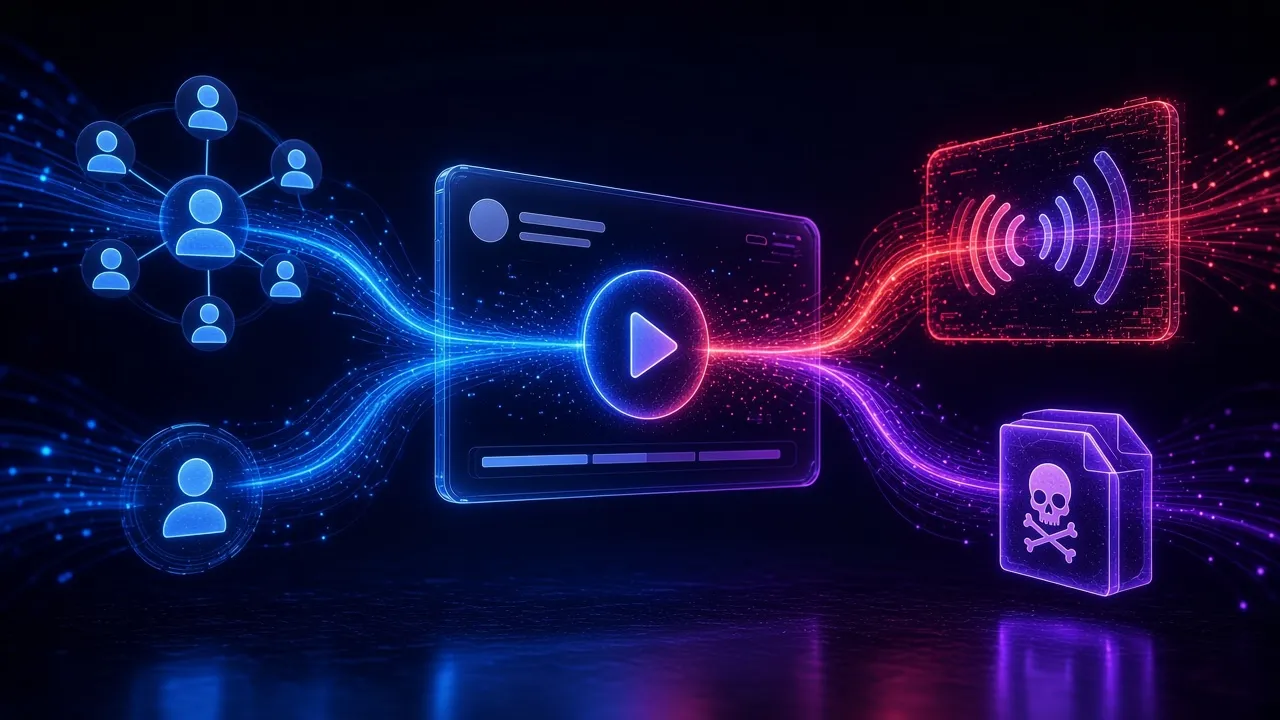
A map of the ways OTT content leaks out, from password sharing to restreams and pirate downloads, and which are product problems and which need enforcement.
OTT platforms lose viewers to several different kinds of leakage, and they are not all piracy in the same sense. Credential sharing is mostly a product and policy problem handled inside your own service. Account resale and stolen credentials sit in between. Restreaming, ripped downloads and illegal IPTV are external piracy that needs detection and enforcement. Treating them as one problem leads to the wrong fixes: takedowns cannot stop password sharing, and stricter logins will not remove a pirate restream.
This guide maps the main OTT piracy types, how to recognise each and who usually owns the response. For help with the external side, see Ayatii's OTT and streaming piracy protection and leak detection and watermark tracing services.
Key Takeaways
- Separate inside and outside problems. Sharing and account abuse happen within your service; restreams and downloads happen outside it.
- Match the owner to the problem. Product, security and enforcement teams each handle different leakage types.
- Trace before you enforce. Forensic watermarking can show which account or session a restream came from.
- Combine controls with takedowns. Cutting off the source account and removing the copy work best together.
Why the distinction matters
Every leakage type shows up in the same way at first: people watching your content without paying you for it. The causes are different, and so are the tools. A platform that sends takedown notices about shared passwords, or tightens device limits to fight a restream on a pirate site, spends effort without reaching the source. Naming the type first lets each team act on the part it controls.
The main types of OTT leakage
Table 1. OTT leakage types and who usually owns the response
| Type | What happens | Mainly a | Typical response |
|---|---|---|---|
| Credential sharing | Subscribers share logins with people outside the household or plan | Product and policy issue | Terms of use, household or device rules, concurrent stream limits, sharing add-ons |
| Account resale and stolen credentials | Logins obtained by fraud or credential stuffing are sold or shared publicly | Security and fraud issue | Account protection, anomaly detection, password resets, takedown of public listings selling accounts |
| Restreaming | A legitimate session is captured and rebroadcast live through pirate sites, social platforms or IPTV | Enforcement issue | Live monitoring, notices to hosts and platforms, watermark tracing to the source session |
| Ripped downloads | Episodes or films are captured and uploaded to cyberlockers, torrents or pirate sites | Enforcement issue | Monitoring, takedowns, search delisting, tracing the leak |
| Illegal IPTV | Your channels or events appear inside paid pirate IPTV packages | Enforcement issue | Disruption at source, reseller and infrastructure level, sometimes legal action |
Credential sharing: a product problem first
Sharing a login with someone outside the account is usually a breach of a service's terms rather than the kind of public distribution that copyright notices are designed for. The tools that work are inside the platform: clear terms, household or device rules, concurrent stream limits and paid ways to add extra users. Whether and how strictly to enforce these is a commercial decision about friction and customer experience, not an enforcement task.
Sharing becomes an enforcement issue when it turns public, for example when logins are posted in forums, sold in bulk or bundled into a service. At that point it overlaps with account resale.
Account resale and stolen credentials
Some leakage comes from accounts the real subscriber never meant to share: logins stolen through phishing or reused passwords and then sold cheaply as "lifetime" or "premium" access. Signs include many logins from unrelated locations, sudden device churn and complaints from customers locked out of their own accounts.
- Security teams handle detection, forced resets and stronger sign-in protections.
- Enforcement teams can report public listings, channels and storefronts that sell your accounts, using the platform's own reporting routes.
- Customer teams help genuine subscribers recover access and secure their accounts.
Restreaming and ripped downloads
Restreaming takes a legitimate stream and rebroadcasts it live. Ripped downloads capture the content and distribute it as files. Both happen outside your service, so the response is detection and removal: find the copies, notify the hosts, platforms and search engines, and repeat quickly for live content where the value lies in the next few minutes.
Removing copies does not stop the source. If the restream comes from a subscriber account, forensic watermarking can identify the account or session it came from so that it can be suspended. Our guide to content fingerprinting vs watermarking explains how the two technologies divide this work, and the live event anti-piracy checklist covers match-day operations.
Illegal IPTV
Illegal IPTV services package many channels, often including premium sport and entertainment, into cheap subscriptions sold through resellers and apps. They usually take their feeds from legitimate sources and redistribute them at scale, which makes them the most organised form of OTT piracy. Responses range from takedowns of individual streams to disruption of panels, resellers, apps and payment routes, and in some countries blocking orders. See how illegal IPTV services work for the layers involved.
A simple triage process
When a new leak is reported, a short set of questions points it to the right team:
- Is the content being viewed inside our service or outside it? Inside points to product or security; outside points to enforcement.
- Is access being sold or offered to the public? If so, enforcement should act on the listing, whatever the cause.
- Can we identify the source account or session? Watermark data or session logs allow action against the source.
- Is it live? Live leaks need same-event action; on-demand leaks can follow a regular removal and delisting cycle.
- Is the same source recurring? Repeat sources justify escalation beyond single notices.
For a wider view of the platform-side and enforcement controls, see how Ayatii protects OTT streaming platforms from piracy.
Talk to Ayatii about protecting your content
Ayatii is an anti-piracy and brand protection company based in Dubai. We monitor for infringing content, verify what we find and handle takedowns for streaming platforms, broadcasters and content owners. Contact the team to discuss what you need to protect.
You can also reach us at contact@ayatii.com or on +971 543509790.








FAQ
Is password sharing the same as piracy?

Not usually. Sharing a login generally breaches a service's terms and is handled with product rules such as household or device limits. It becomes closer to piracy when logins are sold or offered publicly.
Can takedown notices stop credential sharing?
No. Notices remove copies hosted by third parties. Sharing happens inside your own service, so it is managed through account rules, security controls and pricing options.
How can an OTT platform find the account behind a restream?
Forensic watermarking embeds an identifier in the video for each session or account. When a restream is found, the watermark can be extracted to show which account or session it came from.
What is the difference between restreaming and illegal IPTV?
A restream is a single rebroadcast of a stream, often on a pirate site or social platform. Illegal IPTV is an organised paid service that bundles many channels, sold through resellers and apps.
Ayatii
—
Anti-piracy and brand protection, Dubai
Ayatii is an anti-piracy and brand protection company based in Dubai. The team monitors for unauthorised copies of streaming and broadcast content, verifies what it finds and handles takedowns with hosts, platforms, search engines and app stores.
To discuss protecting your content, write to contact@ayatii.com or call +971 543509790.